
Today, I have the pleasure of introducing Rudis Sylva, an independent Swiss watch brand celebrating its twentieth anniversary in 2026. When I mention farmer-watchmakers, machine tools and football, you might wonder what connects these three worlds. Yet each has a place in the life of Jacky Epitaux, the entrepreneur behind this project. Through Rudis Sylva, he brought together the skills needed to explore an unusual mechanical idea: making two balance wheels work together through intermeshing teeth. Before taking a closer look at the RS23, I would like to introduce the man behind the brand, the region he feels so strongly about and the encounters that helped bring this invention to life.
I first met Jacky at Watches and Wonders 2023. We spent some time talking at the brand’s stand, where he introduced me to his world. I met him again this year during Geneva Watch Days 2026, in central Geneva. We also spent time together over a meal, which helped me understand more about the person behind the watches and what these twenty years of independence mean to him. I appreciated his unassuming manner and the generosity with which he shared his experiences. Meeting again made me want to explore what came before the watch: his childhood in the Jura, his professional experience and his attachment to the region’s craftspeople.
Originally from Les Bois, in the heart of the Franches-Montagnes, Jacky grew up among workers and farmers. In an interview, he recalls childhood memories shaped by the seasons: dandelions, or dents-de-lion, picked in spring for salads served with bacon from the neighbours’ pigs, followed by hazelnuts gathered in autumn. Nature was also his playground. In winter, he went downhill and cross-country skiing, skated and played ice hockey on frozen ponds; in summer, he walked and swam in the Doubs. Football became important to him at an early age, through the club his father founded in Les Bois. That passion would eventually help shape his career.
After business training in La Chaux-de-Fonds, he spent two years teaching downhill and cross-country skiing, notably in Crans-Montana. Spotted by the coach of Le Locle’s football team, he agreed to join on the condition that he could find a job compatible with his sporting commitments. At twenty-four, he joined Dixi in Le Locle as administrative manager of a division producing machine tools for advanced industries. There, he discovered the demands of precision machining and a world in which a few microns could make the difference against Japanese or German competitors. Some of the machines had to work on large aerospace components, meeting particularly demanding requirements for geometry and accuracy.
Jacky spent eleven years at Dixi, where he also became familiar with selling machining solutions across European markets. He then joined Zenith, at the time linked to the Dixi group, and spent several years contributing to its international development, notably through the El Primero chronograph. He moved from the machine that makes the components to the watch that needs to be presented, explained and introduced abroad. This experience deepened his interest in watch mechanisms, as well as the crafts and finishing involved. His travels made regular football more difficult, without taking him away from the sport entirely: he also became involved as a coach, instructor and club official. Sport remained a source of camaraderie, teamwork and perseverance, even when the results fell short of expectations.
After LVMH acquired Zenith, he joined the R&R Time group, taking responsibility for sales and marketing for brands including Rodolphe, Roamer, CAT and Bruno Banani. When Rodolphe became independent in 2001, he continued alongside the designer as an executive and shareholder. Product development and brand management added another dimension to his industrial and commercial experience. Closer ties with the Franck Muller group later gave him the opportunity to sell his shares and consider a project of his own. This background helps explain the role he would take at Rudis Sylva: an entrepreneur able to bring specialists together, understand their constraints and give their work a shared direction.
The history of Les Bois is part of the wider settlement of the Franches-Montagnes. In 1384, Imier de Ramstein, Prince-Bishop of Basel, granted a charter exempting the inhabitants from certain taxes, including the taille tax, to encourage settlement and the clearing of land on the high Jura plateau. These privileges gave the territory its name, first “la Franche Montagne”, then “les Franches-Montagnes”: the word franche refers to freedom from those taxes. According to the history published by the municipality, Les Bois first appears in records in 1434. Local tradition holds that Jean Ruedin, from Cressier in what is now the canton of Neuchâtel, settled there in the fifteenth century and helped clear the forest. The village would bear the name “Les Bois Jean Ruedin” until 1792. Long before watchmaking, this was the story of communities settling, clearing land and developing an agricultural economy in a region with harsh winters. It explains the place of farms, forests and working the land in the local identity.
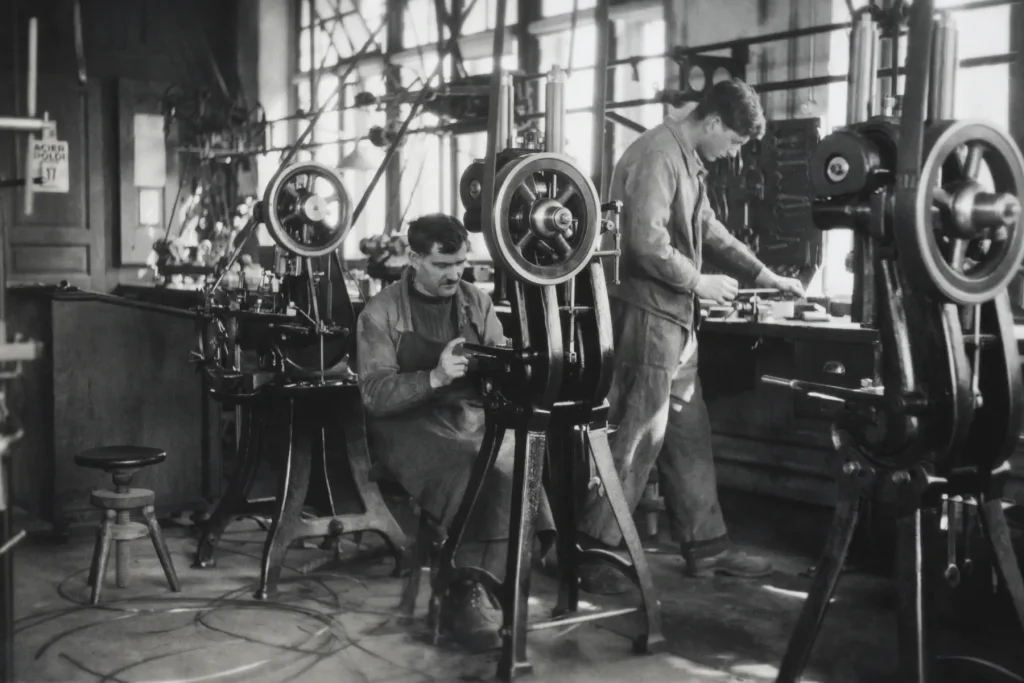
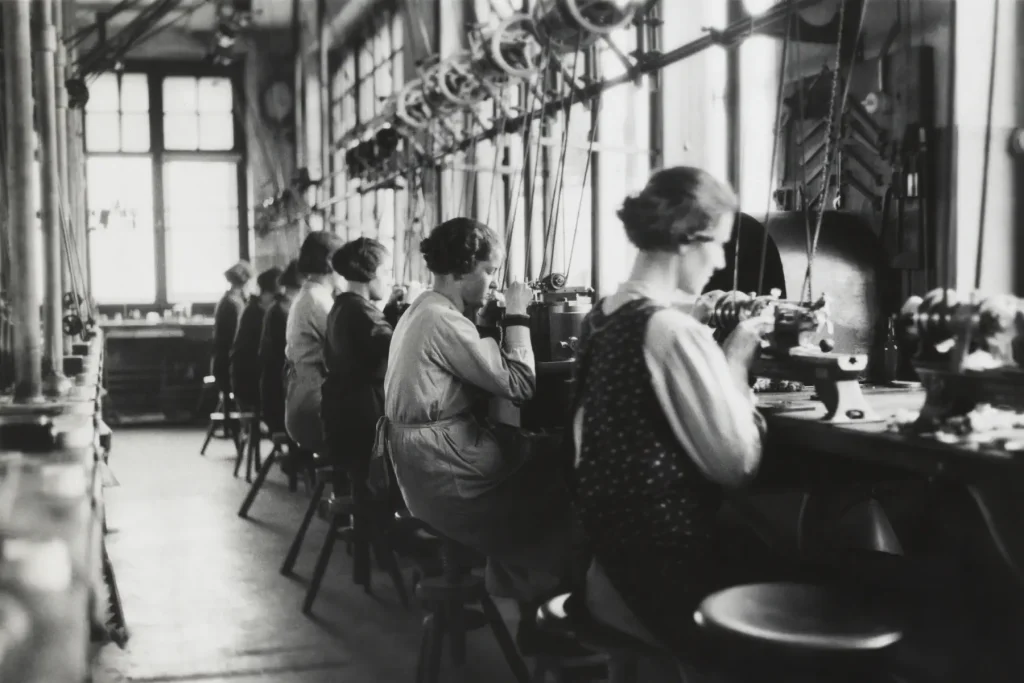
Watchmaking gradually developed there during the eighteenth century, alongside agriculture. Throughout the long winter months, making components gave families another source of income. Workbenches were placed near farmhouse windows to make the most of natural light. A farmer could become a watchmaker for part of the year, while components travelled between workshops and trading houses, particularly towards La Chaux-de-Fonds and Le Locle. This system relied on dividing tasks between people who each mastered a particular operation. It helped build a network of skills that were passed on, became increasingly specialised and eventually extended beyond the home. This is also why the region’s watchmaking history can be read as much in its farms and workshops as in the names on watch dials.
During the nineteenth century, the growth of businesses and production facilities took this activity to another scale. The Baume family opened a watchmaking trading office in Les Bois in 1830; the Baume brothers’ company would be registered in 1834, long before the Mercier name became associated with it. In 1852, Émile Huot also settled in the village and developed a business involving escapement components. Manufacturers of movement blanks, wheel and escapement specialists, mechanics and machine builders all contributed to this regional specialisation. The grouping of several manufacturers would lead, in 1932, to the creation of Fabriques d’Assortiments Réunies, known as FAR. Les Bois and its neighbouring towns and villages thus contributed to an industry whose reach extended far beyond the Jura. It was within this network of crafts, built over generations, that Jacky would find the partners for his project.
In 2006, he founded the brand with his cousin Laurent Frésard, who works in wealth management, and Fabrice Thueler, head of Swiss Finest, a company in Saignelégier specialising in high-end watch components. Each brought something different: Laurent contributed financing, Fabrice provided manufacturing capabilities, while Jacky drew on his commercial experience, industry knowledge and contacts to organise the project. Fabrice Thueler has since left Rudis Sylva. The name reflects their roots: Rudis Sylva refers to Jean Ruedin and to the forest, sylva in Latin, recalling the history of Les Bois. Their ambition was to develop a movement of their own by drawing on regional expertise. Starting with a blank sheet meant thinking through the entire construction, down to the smallest components, then manufacturing, assembling, testing and revising whatever needed further work.
The movement brought together very different skills: design, machining, case and dial making, engraving, decoration and assembly. Jacky worked with specialist companies and craftspeople. I like the way this shows what an independent brand can be, with clear choices and partners whose contributions are recognised. Mechanical research and finishing were the project’s two priorities. Several years of development, testing and refinement would be needed to make the first movement reliable.
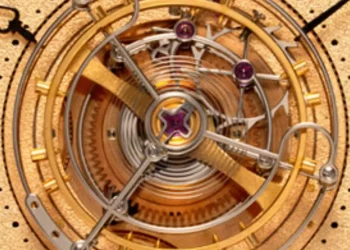
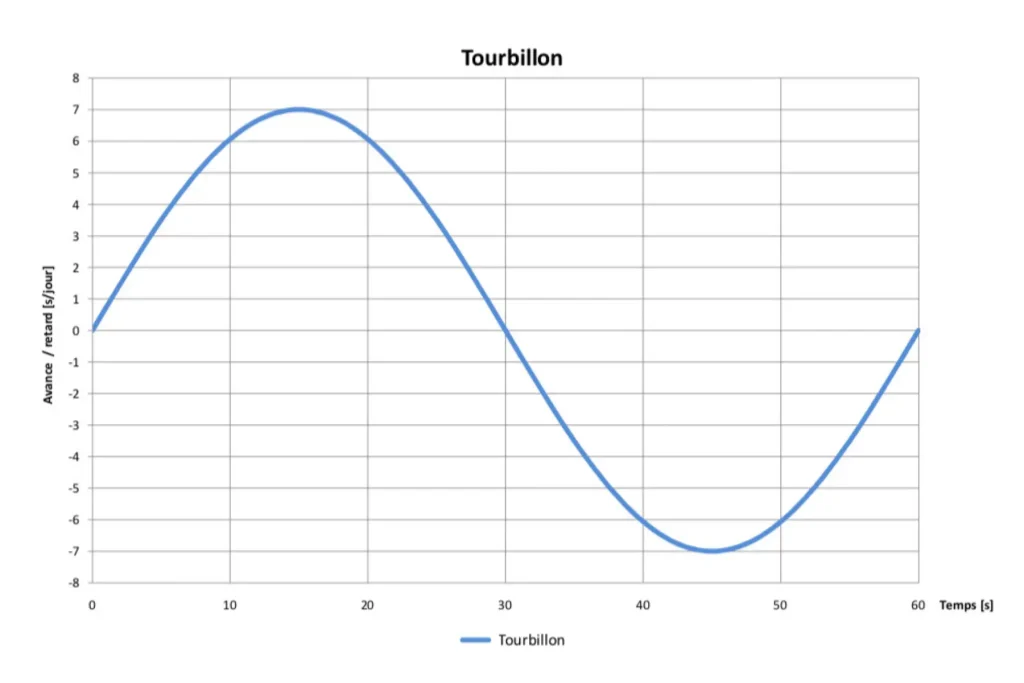
Presented at Baselworld in 2009, the Harmonious Oscillator became Rudis Sylva’s signature. The patent names Mika Rissanen, a Finnish watchmaker specialising in complications, as its inventor. To understand the appeal of this approach, we need to return to a longstanding concern in watchmaking: reducing rate variations caused by the position of the watch, particularly under the influence of gravity. The tourbillon, patented by Abraham-Louis Breguet in 1801, addresses this by rotating the balance wheel, its hairspring and the escapement inside a cage, generally once per minute. This rotation takes the assembly through different orientations, averaging out certain rate errors in vertical positions.
The Harmonious Oscillator approaches this through two toothed balance wheels coupled together and driven by a single escapement. Rudis Sylva describes their interaction as instantaneous compensation for certain rate errors in vertical positions. The earliest watches combined this system with a rotating cage. To me, this investigation into the workings of the regulating organ is what makes the invention interesting.
Unveiled at Watches and Wonders in 2023, the RS23 takes this architecture further by removing the rotating cage. The axes of the balance wheels remain in fixed positions within the movement, while the wheels continue to oscillate. This construction makes their interaction easier to see and gives the invention another form of expression.
With the RS23, I wanted to return to an invention that I believe deserves more attention from enthusiasts and collectors of independent watchmaking. Let us now look at how it fits into the watch, through its case, display and, above all, its movement.
Table of Contents – Rudis Sylva RS23
What Are the Specifications of the Rudis Sylva RS23?
Case
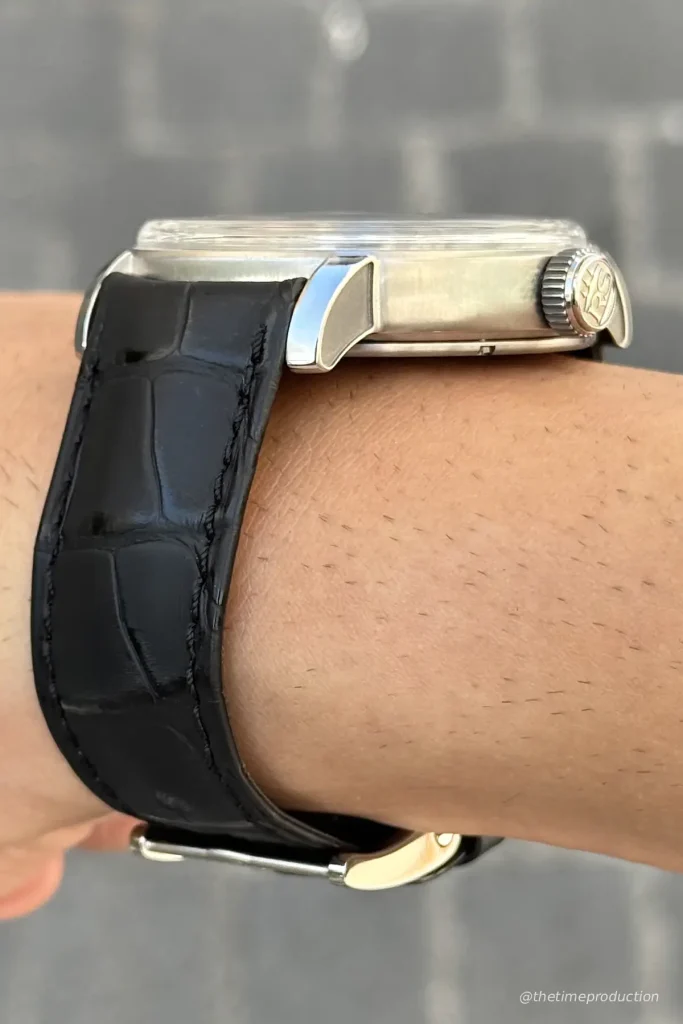
For the RS23, Eric Giroud designed a titanium case measuring 44 mm wide and 12.9 mm thick, including the domed crystal, with 23 mm between the lugs. The more restrained opening and inner flange give the watch a more compact appearance than earlier Rudis Sylva creations. On my wrist, it remains a fairly substantial watch, but its short, well-curved lugs allow it to sit reasonably well. Titanium brings welcome lightness given the size of the case.
The surface finishing adds depth to this construction. The case middle has flat sides with vertical brushing, while the tops of the lugs are polished. Their sides are slightly recessed and given a sandblasted finish that emphasises their shape. I appreciated the visual contrast between the satin finish of the case middle and the polished sections of the lugs. Depending on the angle from which you view the watch, the latter catch the light and bring out the different facets of the case.
The domed sapphire crystal opens up a broad view of the movement’s architecture. Despite its curvature, I found legibility very good, while being able to appreciate the depth of the components from different angles. The generously sized titanium crown also offers a good grip. It bears the engraved Rudis Sylva logo, composed of three fir trees on three mountains, a reminder of the brand’s Jura roots.
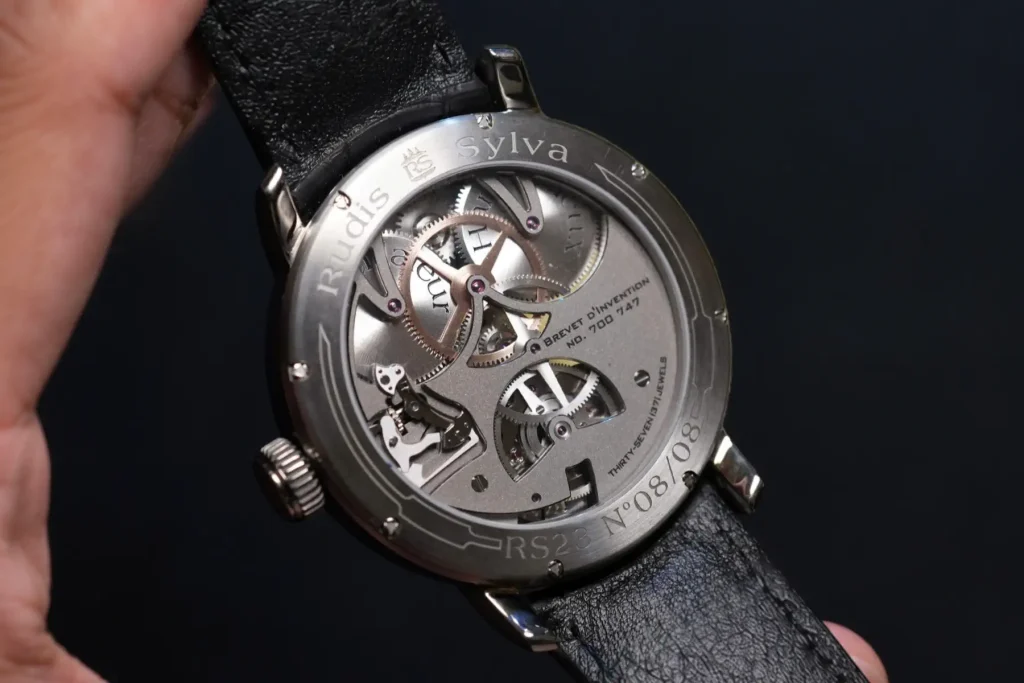
At the back, the titanium caseback is secured with screws and frames a sapphire window revealing the other side of the movement. Its decoration combines hand engraving with engraving carried out using a milling cutter. The stated water resistance of the RS23 is 30 metres.
Dial
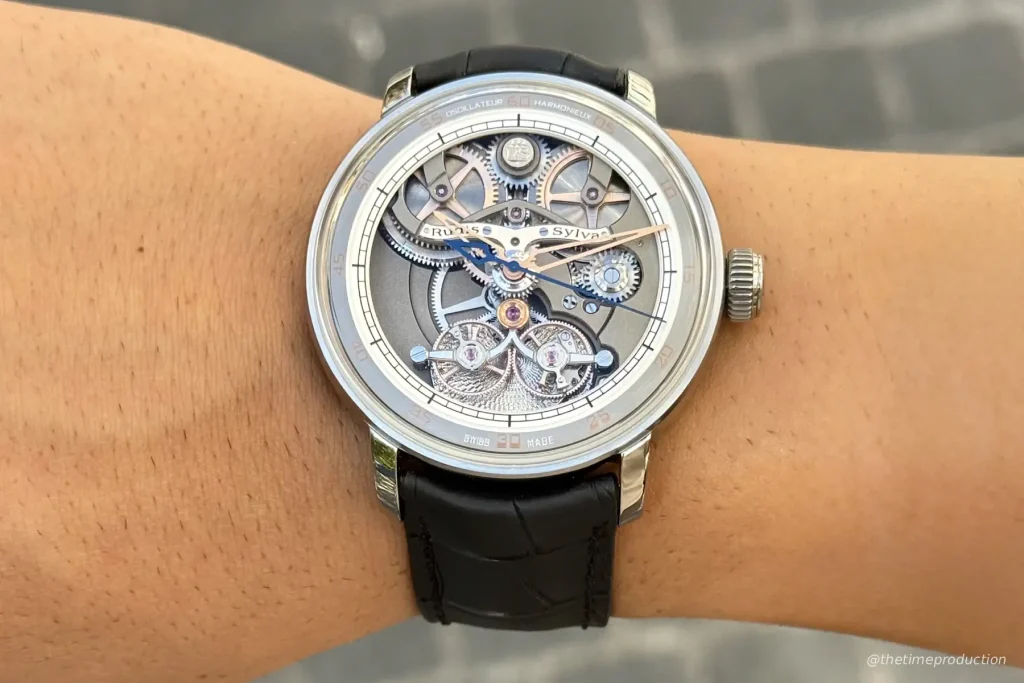
The RS23 dispenses with a solid dial, arranging its display directly above the movement. Hours, minutes and seconds are read centrally, whereas earlier Rudis Sylva watches displayed the hours and minutes off centre. The two barrels and two balance wheels form a symmetrical composition, with the different levels of the movement remaining visible.
The Harmonious Oscillator bridge carries a flinqué decoration designed by Georges Brodbeck, a guillocheur based in Saignelégier. Executed by hand, this work differs from the pyramid pattern found on some of the brand’s earlier creations. That pattern is produced on a straight-line engine, whereas the RS23’s decoration uses a rose engine equipped with rosettes, the shaped cams that determine the pattern’s lines. In 2023, Georges Brodbeck received the Gaïa Prize in the Craftsmanship and Creation category, awarded by the Musée international d’horlogerie in La Chaux-de-Fonds. The distinction recognises, among other things, his work preserving engine turning, restoring historic machines and passing on the knowledge of how they operate.
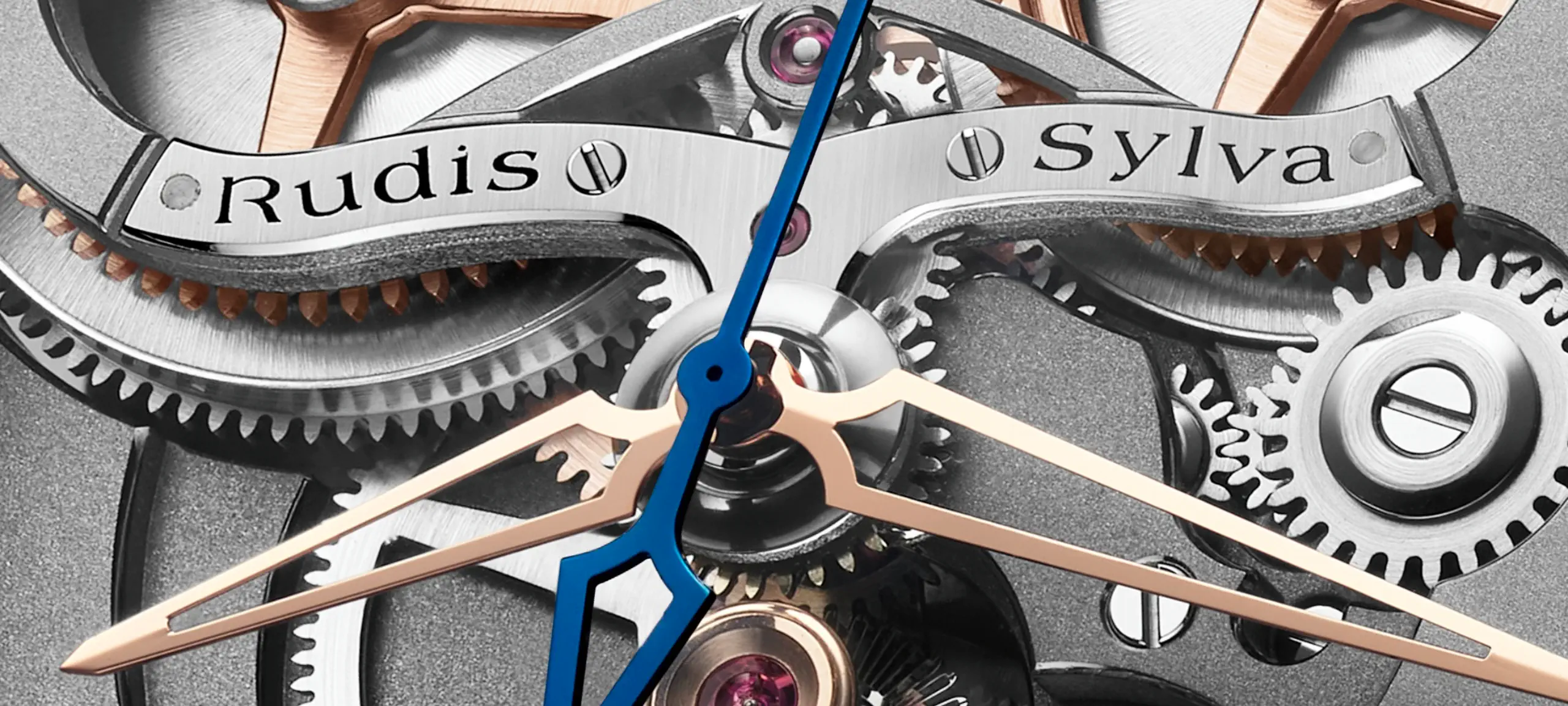
On the example I saw, the display’s perimeter combines a railway track on a creamy white base with brown numerals in increments of five, up to 60. The words “Oscillateur” and “Harmonieux” sit on either side of 60, while “Swiss Made” flanks 30. At twelve o’clock, the RS monogram provides another visual reference. Just above the hand axis, a broad bridge with sweeping curves carries the “Rudis Sylva” signature, divided between its left and right sides. I like the way the inscriptions are integrated into the construction, with the openings onto the movement giving the whole composition its rhythm.
The brass hour and minute hands are plated in 5N rose gold. Their bold lines complement the warm tones of the mechanism, while the slender blue central seconds hand adds a distinct touch of colour.
Movement
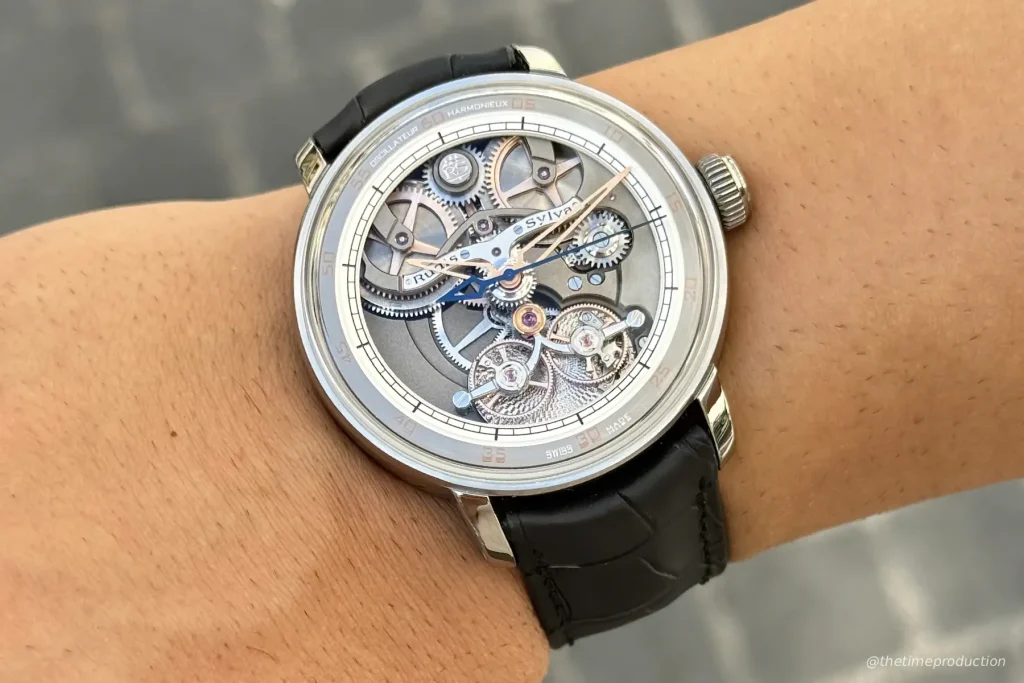
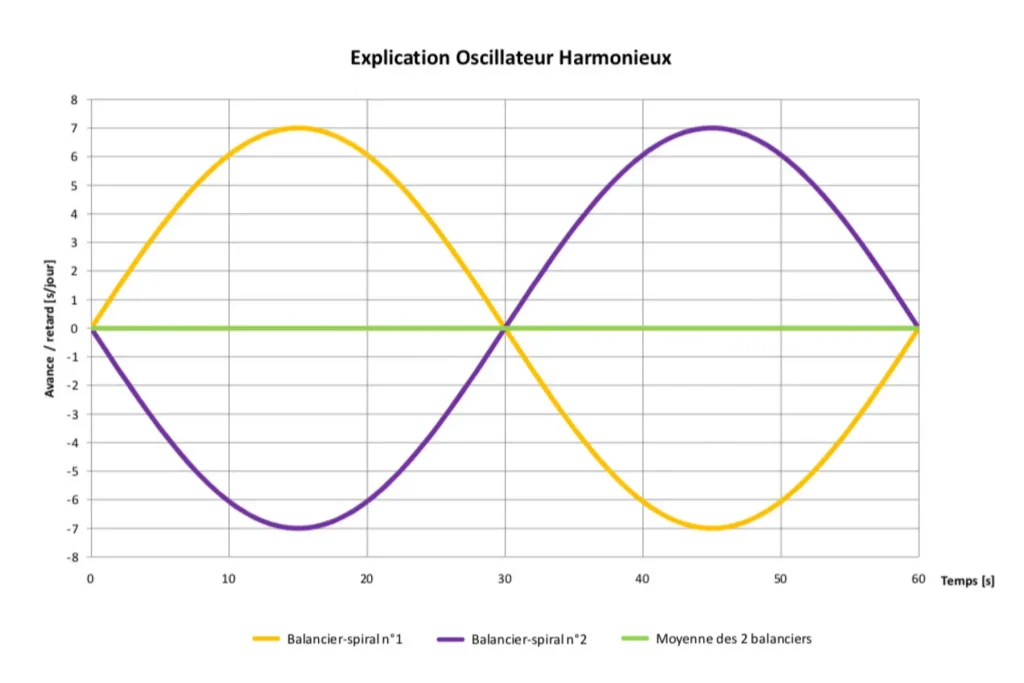
The appeal of the RS23 movement lies in the way its two balance wheels work together. Their teeth mesh directly, while a single escapement sustains their oscillations. It delivers impulses to one balance wheel; the toothed connection transmits motion to the other and forces them to oscillate in opposite directions with the same amplitude.
Each has its own hairspring. The springs are wound in the same direction but expand and contract in opposition: as one contracts, the other expands. Rudis Sylva seeks to use these complementary behaviours to compensate for certain rate disturbances caused by gravity, particularly in vertical positions. The brand describes this as an instantaneous correction built into the operation of the regulating organ.
It is in compensating for rate deviations caused by gravity that the Harmonious Oscillator, in my view, stands alongside the tourbillon. A conventional tourbillon whose cage completes one revolution per minute averages certain rate errors in vertical positions over that revolution. Rudis Sylva claims compensation with every oscillation, through the combined action of the two balance wheels and their hairsprings. The RS23 pursues this correction without a rotating cage. In principle, I find this approach more convincing than that of a conventional tourbillon: it seeks continuous compensation within the regulating organ itself, rather than averaging through rotation. This is why I see it as a real alternative to the most accomplished tourbillons.
This construction must also be distinguished from the resonance architectures offered by F.P. Journe and Armin Strom. Their two regulating systems each have their own escapement and synchronise through exchanges of energy, without the balance wheels meshing. At F.P. Journe, these exchanges take place through vibrations transmitted to the movement’s structure; at Armin Strom, a dedicated coupling spring connects the two oscillators. On the RS23, the balance wheels’ teeth mesh directly: their coordination is mechanically imposed and a single escapement sustains the whole system. Rudis Sylva’s patent itself uses the term “mechanical resonance”, but this shared expression should not lead us to treat these different ways of operating as the same.
This system is integrated into a manually wound movement powered by two barrels, with a stated power reserve of approximately 72 hours and a frequency of 3 Hz, or 21,600 vibrations per hour. A stop-seconds function makes setting the time easier. The aim remains consistent timekeeping, particularly as the watch changes position and the mainsprings unwind.
The finishing programme is more restrained than on the RS12 and RS16. The simplified construction has fewer components and fewer inward angles to finish. Jacky mentions three inward angles retained on the RS23 and explains that the standard of execution remains the same for the operations that have been kept. The mainplate and bridges combine sandblasted surfaces, brushed areas and bevels polished by hand. The wheels feature circular decoration and diamond-polished bevels, while the barrel drums are snailed. The flinqué on the oscillator bridge completes the decoration. To my eye, these finishes bring out the design of a movement whose operation can be observed directly.
Strap
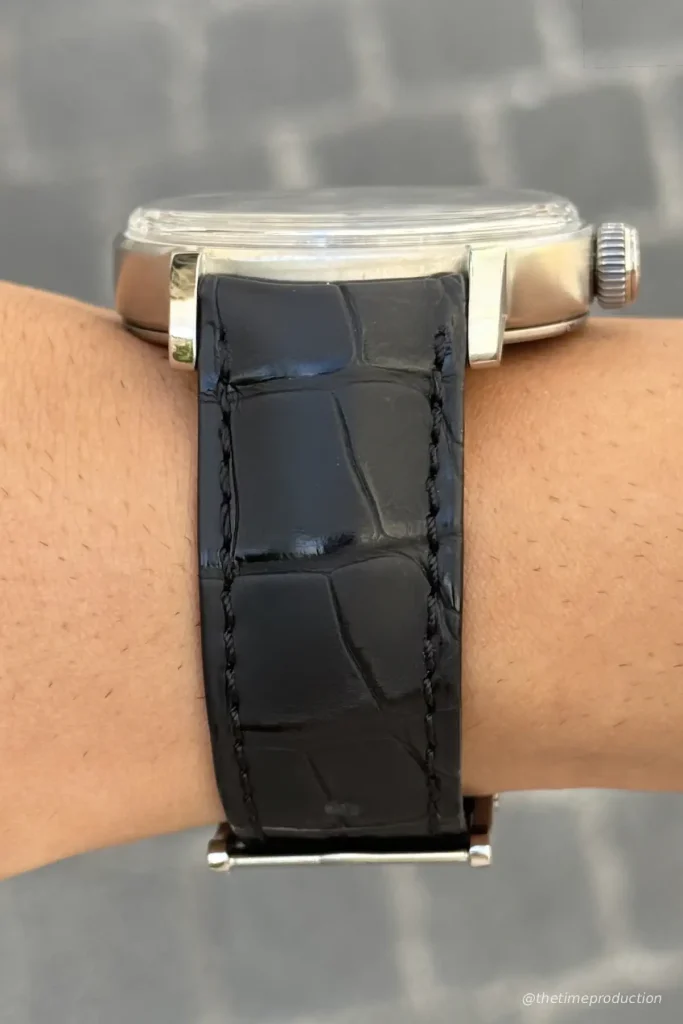
The RS23 comes on a black alligator leather strap, with matching stitching and a black calfskin lining. I appreciated its slightly matte appearance, which brings out the leather’s texture and which I prefer to the sometimes very glossy finish of certain alligator straps. The workmanship struck me as careful, and the strap fits neatly against the case. It closes with a titanium pin buckle whose carefully shaped design carries the Rudis Sylva logo at its centre.
How Much Does the Rudis Sylva RS23 Cost?
The titanium Rudis Sylva RS23 presented here is priced at CHF 80,000, in an announced series of eight pieces. The model is also offered in rose gold. This is considerably below the approximately CHF 200,000 to CHF 280,000 asked for some of the brand’s earlier creations. I find the price interesting in light of the mechanics involved and the handwork retained, taking into account the simplifications discussed earlier. Across the brand, stated production remains around ten to fifteen watches per year, with the ambition of gradually increasing that number.
The watch is delivered in a wooden presentation box inspired by a watchmaker’s layette, a small chest of drawers used to store tools and components. Rudis Sylva draws on the idea of the toolbox that an itinerant watchmaker could carry to clients’ homes and open out to recreate a working surface. Two drawers hold a loupe and a screwdriver for changing the strap. In the lower section, a lid lifts to reveal the watch, while another drawer provides space for the warranty documents. I found this presentation very successful: the drawers, the tools and the way the watch is revealed give the box an identity directly connected to the craft.
Rudis Sylva RS23: An Invention Rooted in the Jura
To me, the RS23 makes the Harmonious Oscillator more approachable through a simplified, clearly legible construction. What stays with me is the continuity between mechanical research, manufacturing and execution, together with the names and personal stories of the people who make it possible.
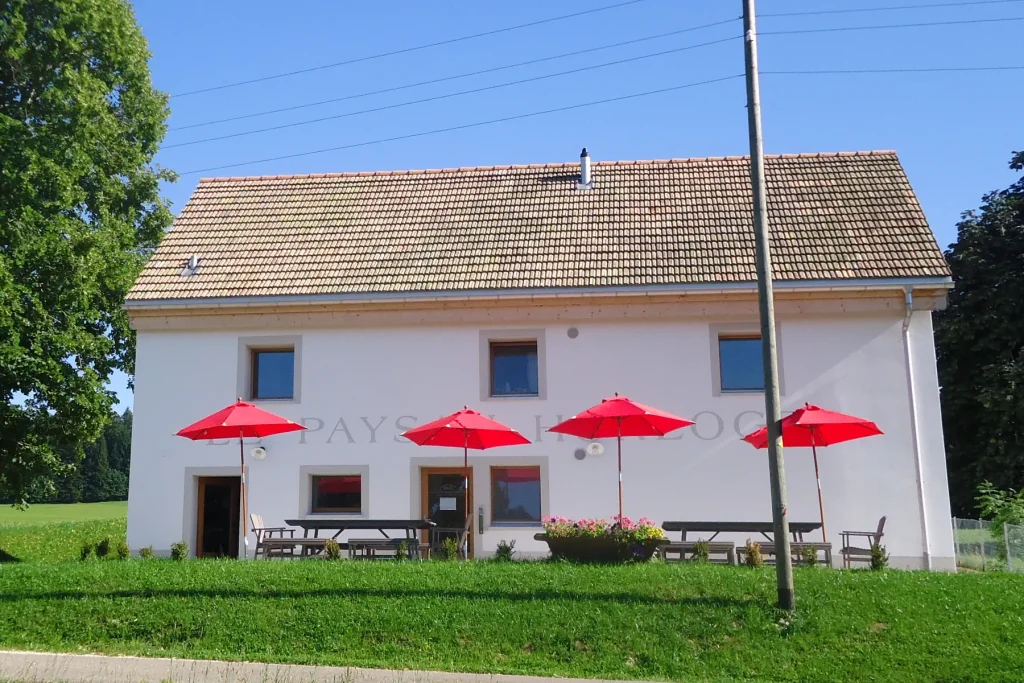
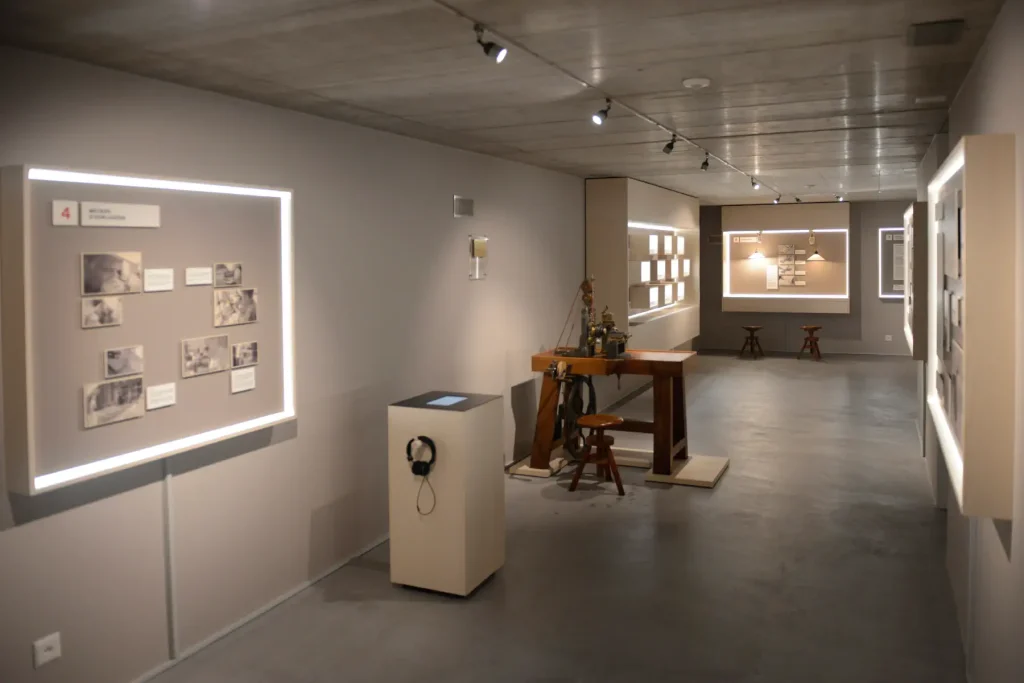
This attachment to the crafts continues in another project initiated by Jacky: the Espace Paysan Horloger in Le Boéchet, within the municipality of Les Bois. Set in a renovated former farmhouse, it brings together a hotel, a restaurant and a museum devoted to the history of farmer-watchmakers. The museum traces the development of their work, from forest clearance to industrialisation, placing the tools and techniques in the context of local people’s lives. This approach appeals to me because it makes the origins of the craftsmanship we admire in watches today accessible.
The “Sur les traces du paysan horloger” trail, roughly twenty kilometres long, can be completed in several stages around Les Bois and Le Noirmont. Farms, former production sites and the landscapes of the Franches-Montagnes help explain how watchmaking became part of the region. The Rosées-Dessous farmhouse and its “Ultima Forsan” sundial, dated 1750, are among the stops. For an enthusiast, I see this as a kind of watchmaking pilgrimage: travelling there to understand how the crafts of this region contributed to the international standing of Swiss watchmaking.
My sincere thanks to Jacky for his time and our conversations. They have made me want to continue the discussion on his home ground. I plan to visit Les Bois in the coming months, discover Le Boéchet and become more familiar with the surroundings in which his project took shape. I would like to share that visit with you and introduce you to the people contributing to this adventure.
As Rudis Sylva celebrates its twentieth anniversary in 2026, a new calibre is being prepared for a watch expected to have more restrained proportions. This opens another possibility for collectors who prefer more discreet dimensions. I look forward to discovering the details and introducing you to this next watch when it is unveiled.
Rudis Sylva RS23 – Watch Specifications
- Brand: Rudis Sylva
- Model: RS23 Harmonious Oscillator
- Case Material: Titanium
- Dial: Openworked Architecture with a Symmetrical Arrangement of Two Exposed Toothed Balance Wheels and Twin Barrels, a Creamy White Railroad Minute Track, a Hand-Guilloché Flinqué Oscillator Bridge Decorated by Georges Brodbeck, 5N Rose Gold-Plated Brass Hour and Minute Hands and a Blued Central Seconds Hand
- Functions: Central Hours, Minutes and Seconds
- Movement: Proprietary Hand-Wound Manufacture Movement, Featuring Rudis Sylva’s Patented Harmonious Oscillator with Two Directly Intermeshing Toothed Balance Wheels, Each with Its Own Hairspring, Driven by a Single Escapement. Fixed-Position Balance Assemblies, Twin Barrels and a Frequency of 21,600vph (3Hz)
- Power Reserve: Approximately 72 Hours
- Water Resistance: 30m (3 ATM)
- Crystal: Domed Sapphire Crystal and Sapphire Exhibition Caseback
- Case Dimensions: 44mm (Diameter) x 12.9mm (Thickness, Including Crystal)
- Strap: Black Alligator Leather with Matching Stitching and Black Calfskin Lining, Fitted with a Titanium Pin Buckle
- Edition: Limited to 8 Pieces in Titanium
- Retail Price: CHF 80,000 (Excluding VAT)
And what do you think of the RS23 and this way of keeping the watchmaking heritage of the Franches-Montagnes alive? Feel free to share your thoughts in the comments. I would be delighted to discuss them with you.
If this article added value or sparked a discovery, you can support the project HERE. Your contribution helps me keep weekly articles and a biweekly newsletter free, accessible, and independent for everyone.
For more information about Rudis Sylva, click here.