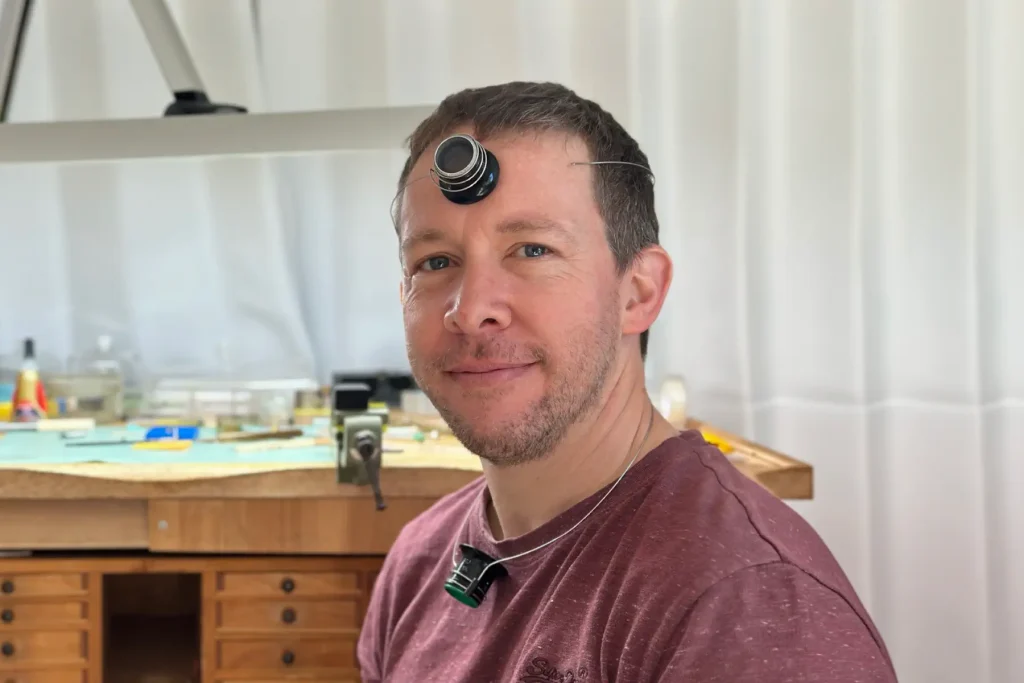
Today, I have the pleasure of introducing an independent watchmaker whose journey connects Switzerland with Japan. If I mention the restoration of antique watches, grand complications at Breguet and a workshop on the outskirts of Tokyo, you may already have recognised Fabian Pellet. We first spoke by video call in July 2024. Several conversations followed before my first trip to Japan, this past September, finally gave us the opportunity to meet in person. I was able to handle his steel prototype and take my own photographs and videos. What particularly interested me was Fabian’s attachment to nineteenth-century watchmaking, something I found clearly reflected in his watch. Before introducing L’Essentiel Titanium Edition, the titanium evolution of his first creation, I would like to revisit the journey that brought it into being.
Fabian was born and raised near Lausanne, in French-speaking Switzerland. His great-grandfather was a watchmaker. He never knew him, but there were tools, components and movements in the family home, with nobody to explain how they worked. Watching his father work on mechanical projects also gave him an early understanding of mechanics. His first watches were a Flik Flak and then a Casio. He remembers wanting the calculator model and receiving the standard version instead. His interest in watchmaking grew during his training. At sixteen, he entered the École technique de la vallée de Joux, completing his apprenticeship between 1999 and 2003 and earning a CFC qualification as a watchmaker specialising in servicing and repair. From 2003 to 2005, he continued at CIFOM, studying for an ES technician qualification in horological restoration and complications. Living in Le Locle and La Chaux-de-Fonds brought him into contact with watch manufacturers, museums and professionals who broadened his understanding of the craft.
In December 2005, he joined Breguet, where he remained until April 2017. He remembers being “like a sponge”, eager to learn from the best watchmakers in every workshop. After working across much of the collection, he joined the minute repeater workshop, a team of five watchmakers. He had long been fascinated by the sound of chiming watches. He later moved into the Grandes Complications department, where he spent ten years, also working on restoration. His assignments included historic watches dating from the founder’s lifetime, Sympathique clocks and small series of complicated creations, including pocket watches with grande sonnerie and tourbillon. These projects combined component manufacturing, historical research and technical drawing. François Erard became a mentor, with his extensive historical knowledge and exacting professional standards. Discussions within the team about mechanisms and manufacturing techniques helped Fabian develop his own skills. As those skills grew, he realised that he could design and make a watch of his own. The desire to try became a project he pursued with determination.
Around 2010, Fabian also began learning 3D computer-aided design, teaching himself alongside a few friends. They challenged one another to draw individual components before progressing to complete movements. This gave him another tool with which to develop his own calibre.
In 2013, his career took him to Japan for a year at the Swatch Group after-sales service centre in Tokyo. He was also familiar with the country from several other visits. Fabian also recalled a personal project involving a Jules Jürgensen movement from the 1860s, wound with a key. It was a gift from his friend Masaharu Nakajima, whose work I have already featured on this blog. The movement had lost its original case, so Fabian restored it and made a titanium case to house it. Machining the metal proved challenging. He later lent the watch to a friend, a watch designer, to wear at a wedding. When returning it, his friend described the interest it had attracted among knowledgeable enthusiasts and said that a watch does not need to be complicated to be appreciated. Fabian says that conviction still guides his work.
In July 2017, his wish to pass on his knowledge led him back to the École technique de la vallée de Joux, this time as a teacher. He taught there for five years, until July 2022. He guided students through regulation, minor complications and finishing watches made as part of their training, alongside theoretical classes in mechanisms, complications and technical drawing. In 2018 and 2019, he also undertook vocational teacher training. Teaching these subjects helped deepen his own understanding. He enjoyed exchanging ideas with his students, while increasingly feeling the need to return to working directly on fine watches and precious materials.
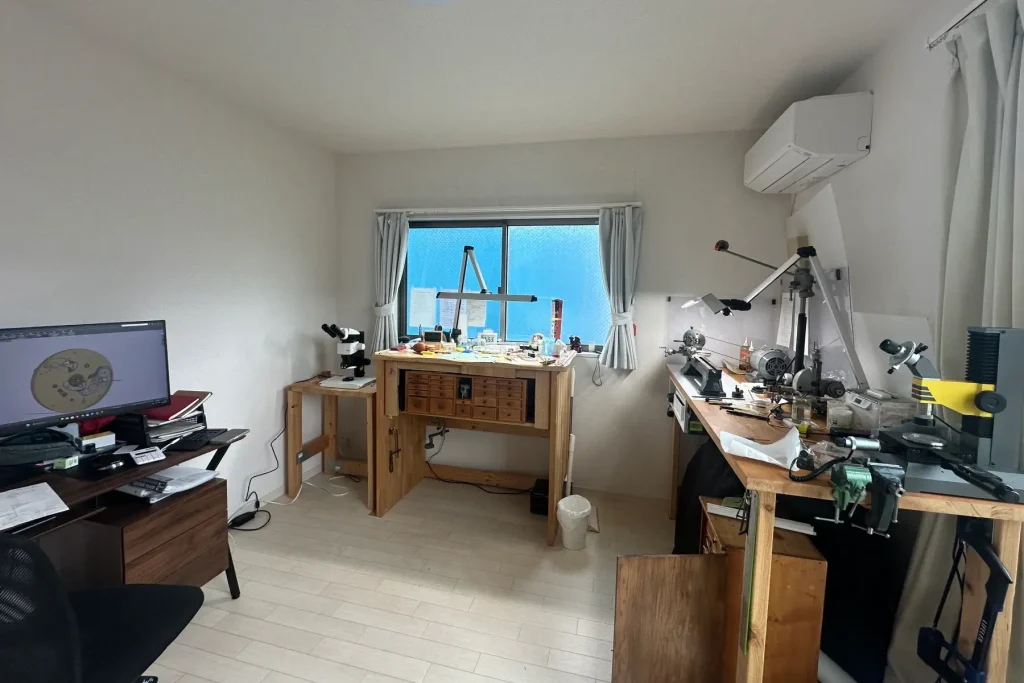
In 2022, Fabian moved to Japan with his Japanese wife and their son to be closer to her family. His workshop is on the outskirts of Tokyo. Setting it up required considerable effort. His professional network was largely in Switzerland, and finding new suppliers for cases, dials and even workbenches proved difficult. He also had to adapt his equipment to a different electrical supply and work in a different climate. He emphasises the help he received from fellow watchmakers in Japan and from teachers at Hiko Mizuno, where he has taught occasional classes since May 2023 and also leads seminars.
In July 2023, he began working as an independent watchmaker, devoting most of his time to his own creations. He also speaks appreciatively of the people he has met in Japan and the depth of knowledge among the collectors with whom he exchanges ideas.
Work on L’Essentiel had begun before his move to Japan. Fabian first defined the characteristics of the watch he wanted to make. He progressed from drawings in two dimensions to a 3D model of the movement, before designing the dial and case. Calculating and positioning the gear train required him to revise the design many times. Five years separated the initial concept from a working prototype, a project pursued, at least initially, alongside a full-time job.
The restored Jürgensen was a particular influence on his thinking about winding. Its key acts directly on the barrel arbor, a construction whose simplicity appealed to Fabian. For L’Essentiel, he chose to place the winding mechanism on the dial side, leaving the view through the caseback unobstructed. The barrel, gear train and mainplate could then be seen along with their finishing. This wish to reveal the fundamental elements of the mechanism explains the name L’Essentiel.
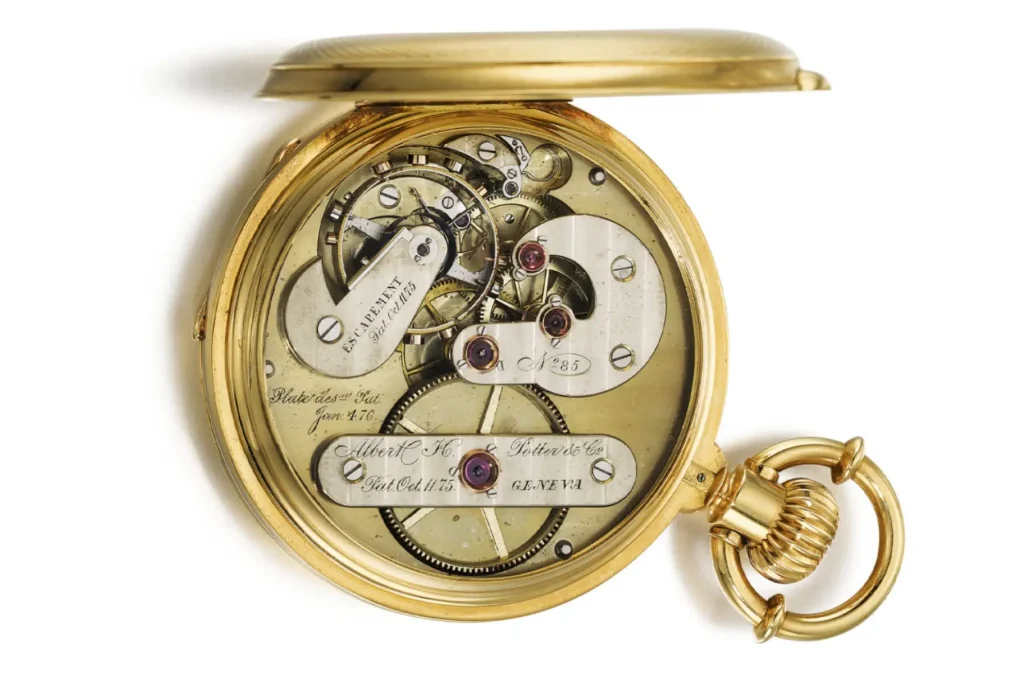
For the shape of the bridges, Fabian cites a pocket watch by Albert H. Potter. He drew inspiration from its curves and the way it exposes the mainplate and gear train, while working from his own calculations and drawings. Other references informed individual components. The escape wheel bridge, for example, takes inspiration from chronometer movements of the 1950s, such as the Zenith 135, whose small escape wheel is supported by a bridge beneath a large balance. These influences relate to specific construction choices and give the watch the historical character I enjoyed when examining it.
The balance itself draws on the shapes found in marine chronometers. François Erard observed that an early version still looked too similar to series-produced balance wheels. Fabian went back to the component and spent three months reworking it. I like this anecdote because it reveals the care he gives to a part that might otherwise be considered purely in terms of its function.
The first edition of L’Essentiel was launched in 2024, limited to three platinum watches, all now delivered. With the Titanium Edition, Fabian revisits the material of his earlier personal project.
The overall design remains very close to the first edition, but Fabian describes around a hundred changes in this evolution. He refers to them primarily as safeguards, adjustments intended to improve the movement’s reliability further. He has also added details that time constraints prevented him from incorporating into the first series. This is the L’Essentiel Titanium Edition I would now like to examine more closely, looking at its construction and the changes he has made.
Table of Contents – Fabian Pellet L’Essentiel Titanium Edition
What are the features of Fabian Pellet’s L’Essentiel Titanium Edition?
Case
L’Essentiel Titanium Edition has a grade 5 titanium case measuring 39 mm in diameter and 9.2 mm thick, including the crystals, with a lug width of 20 mm. The steel prototype I wore felt compact, slim and immediately well balanced on the wrist. Fabian designed the case, refining its shape through several prototypes in search of proportions that would suit a range of wrists. For this new titanium series, he has entrusted case manufacturing to Voutilainen & Cattin SA.
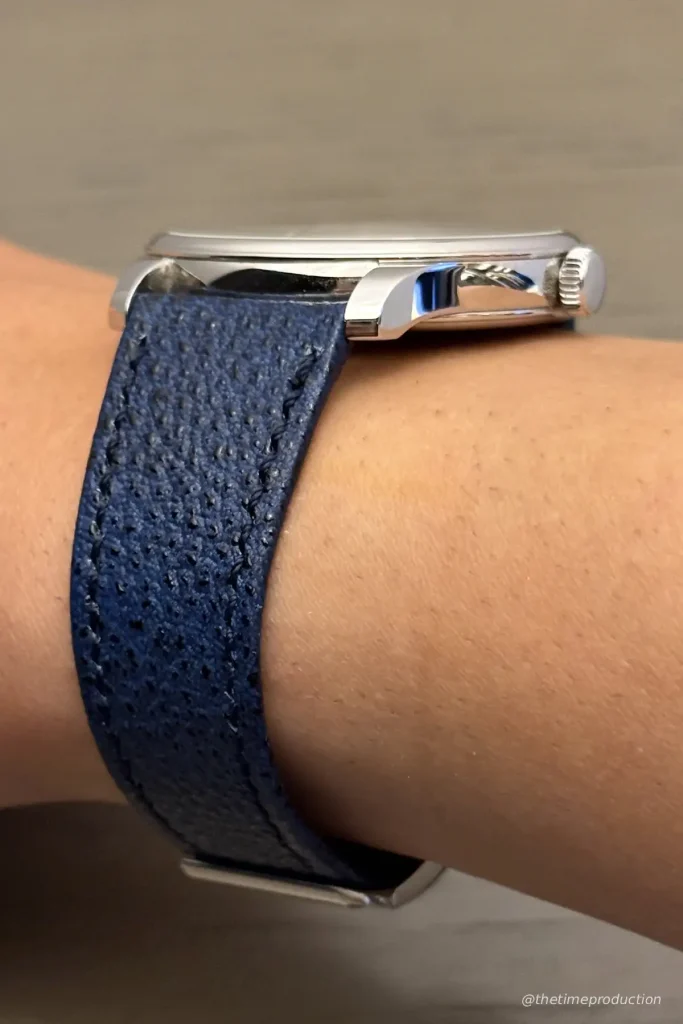
The curvature of the case sides was the detail I particularly enjoyed. The caseband flows into lugs that are not soldered in place, while a rounded, raised bezel completes the profile. Imagine it without the lugs, and the silhouette is almost that of a pocket watch.
The titanium case is available with a polished or brushed finish. Fabian’s new photographs show the brushed version. I appreciate the choice this gives collectors. At 3 o’clock, a knurled crown provides winding and time setting. It carries Fabian Pellet’s logo in relief against a surface with a slightly hammered appearance.
The watch has sapphire crystals front and back. For this evolution, Fabian says he has increased the sapphire thickness by 0.3 mm to improve reliability, also taking into account his suppliers’ preference for crystals at least one millimetre thick. The prototype’s caseback was unmarked. The titanium version now bears “L’Essentiel” above the movement and “Fabian Pellet” below it, in the same typeface. The inscriptions frame the view of the calibre. The stated water resistance is 30 metres, or 3 ATM.
Dial
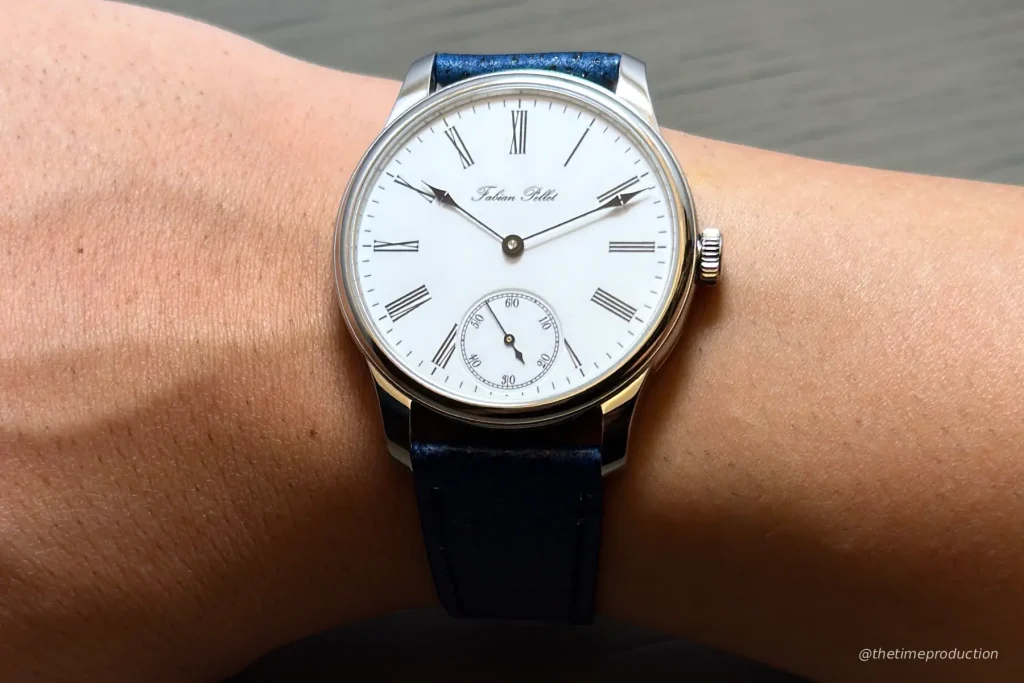
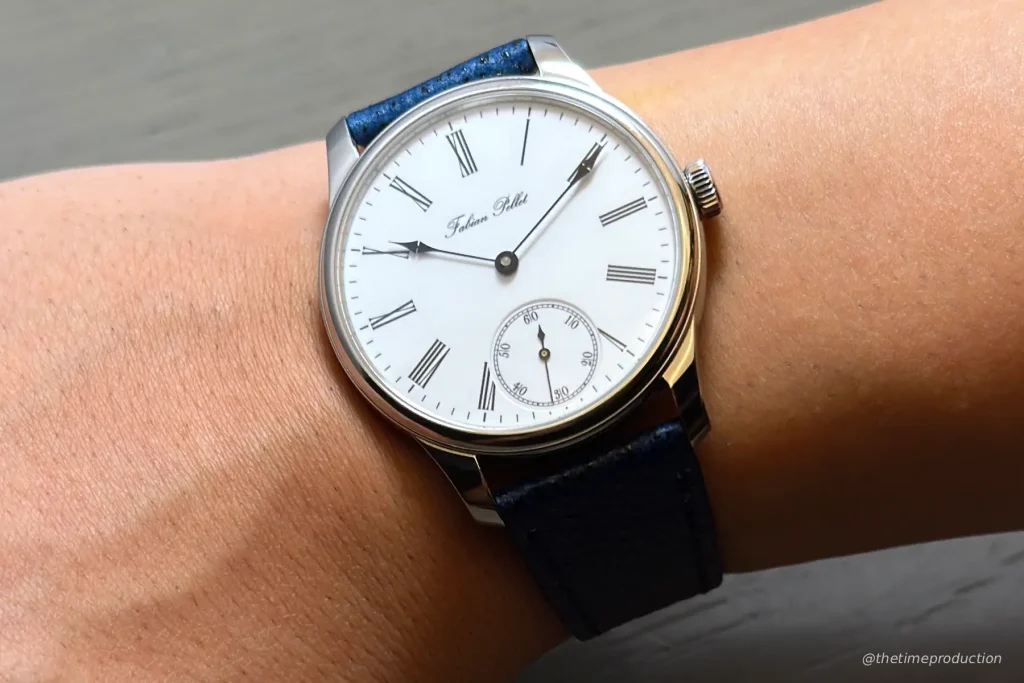
What appeals to me about the dial of L’Essentiel Titanium Edition is its restraint, which encourages a closer look at the details. On the prototype, slight undulations in the opaque white enamel brought the reflections to life as I tilted the watch. I particularly enjoyed this play of light, which reveals the dial’s artisanal character.
Made by hand by Donzé Cadrans, the Grand Feu enamel dial consists of two elements, including a separate disc forming the small seconds subdial at 6 o’clock. Fabian describes five to six layers of white enamel and a rejection rate of around 50% during the production of these dials. The dial is secured by screws acting from the side, reflecting the same desire to keep its fixings discreet.
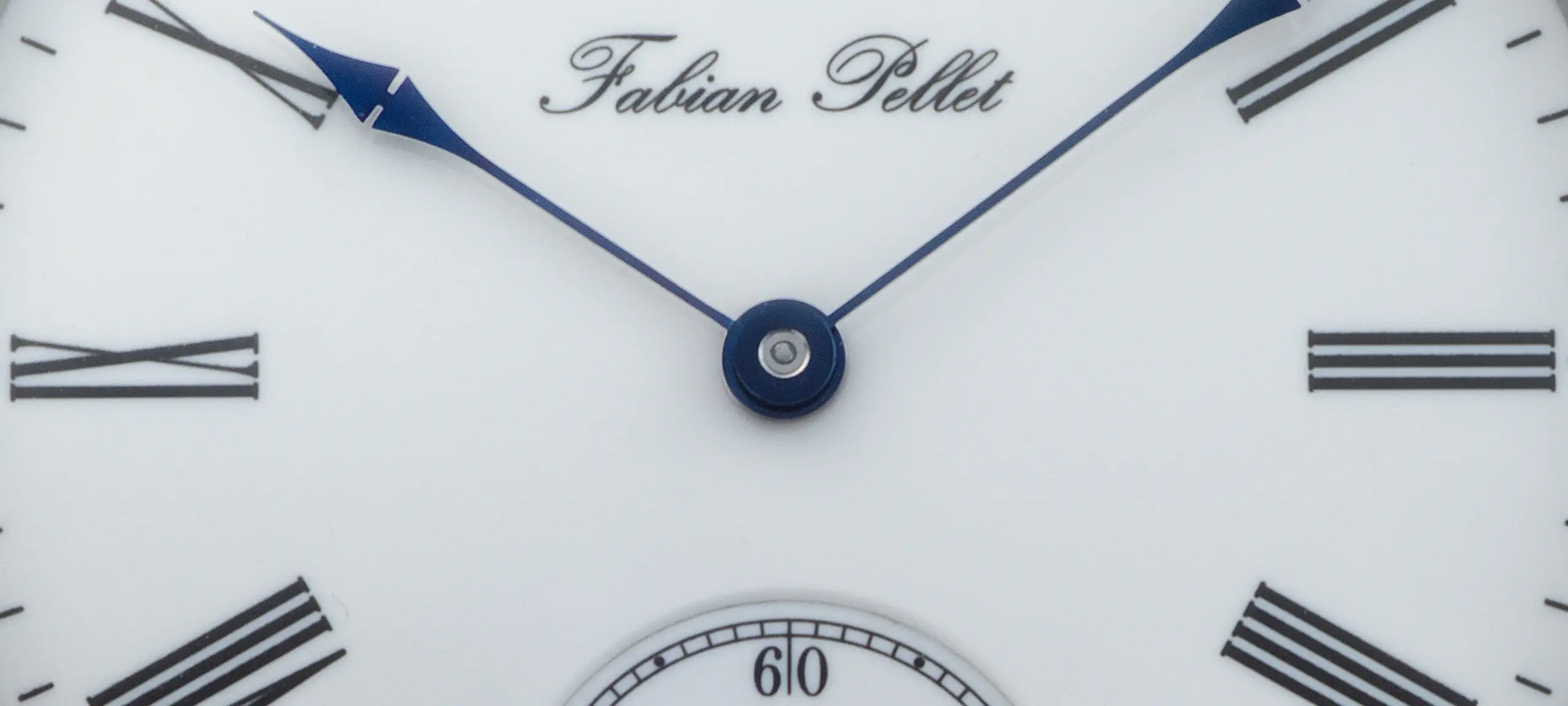
Fine, elongated Roman numerals sit within a peripheral railway minute track. The small seconds display is slightly recessed and has its own railway track, this time marking the seconds. Fabian Pellet’s signature completes the composition. The black markings are also enamel. A paste made from black enamel powder is applied to the white surface before the dial is fired again. Fabian even points out the slight relief of the numerals, visible on close inspection. I appreciated that the enamelling extends to the indications and signature as well.
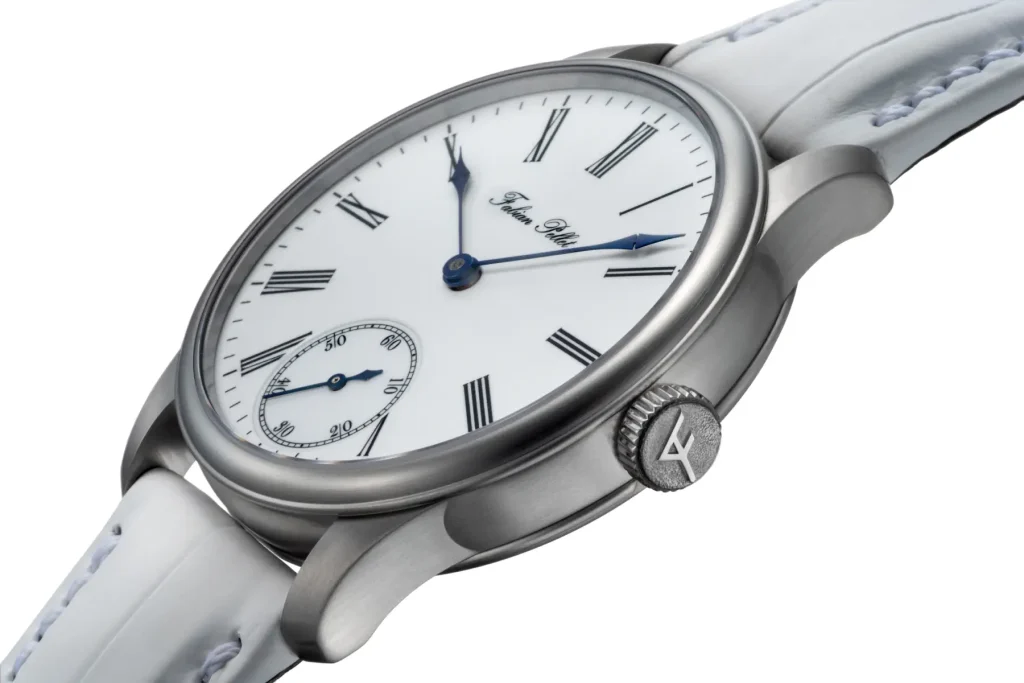
The hour and minute hands have the slender profile of traditional lancet hands. Fabian hardens the steel, gives the hands a flat mirror finish using polishing paste on a tin lap, then blues them over the flame of a spirit lamp. A straight blued hand marks the small seconds.
On the prototype, I particularly enjoyed the depth of the blue and its occasional violet tones. The colour can vary subtly from one hand to another and even across a single hand. Those nuances give the hands a presence of their own against the white enamel and black markings.
Movement
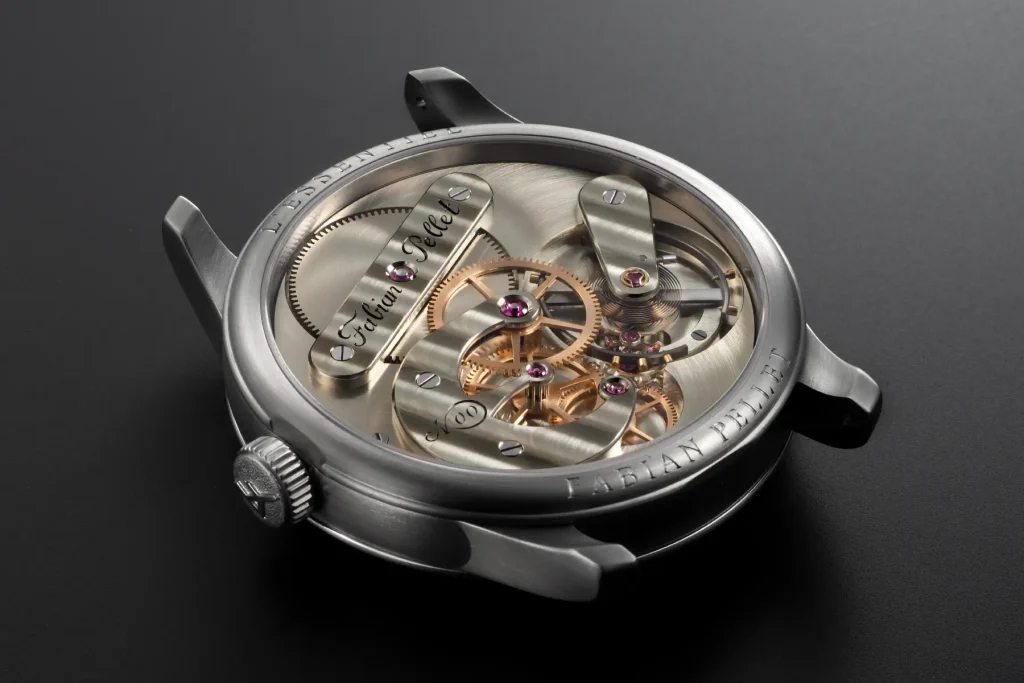
I found the prototype’s movement beautiful. The Titanium Edition houses the FAP 24 evo1 calibre, which retains that open architecture. The bridges expose much of the mainplate and let the eye follow the flow of energy from the barrel through the gear train to the escapement and balance. There is an almost educational quality to this layout. The bridges appear to sit just beneath the sapphire, emphasising their depth and volume.
This manually wound movement measures 32 mm in diameter and 4.25 mm thick. It comprises 102 components and has 25 jewels. Fabian designed the calibre and commissions its core components from specialist manufacturers in Switzerland. The current evo1 series uses CNC machining with the aim of substantially improving precision and reliability. Fitting, assembly and decoration still involve extensive work by hand.
To open up the view through the caseback, the winding and setting mechanism sits between the mainplate and the dial. This is where the crown wheel and ratchet wheel are located. The movement’s fixings to the case are also concealed, and no through-holes remain visible in the mainplate. Achieving this clarity therefore requires additional construction work. Fabian designed a movable lever that carries the crown wheel and three intermediate wheels. In the winding position, the assembly transmits the crown’s rotation to the mainspring. When the crown is pulled out to set the time, springs cause the lever to pivot, bringing one of its wheels into engagement with the motion works. Turning the crown then moves the hands. Fabian recalls encountering a comparable principle in a collection of historic tourbillon training watches while teaching at the École technique de la vallée de Joux. This hidden mechanism accounts for much of the freedom he had in shaping the visible movement.
The large balance, designed by Fabian, measures 14.3 mm in diameter and beats at 18,000 vibrations per hour, or 2.5 Hz. Its rate is adjusted by changing its inertia using regulating weights, while preserving the active length of the hairspring. The hairspring has a Breguet overcoil and is attached directly to the balance cock, which supports the balance. The movement uses a Swiss lever escapement, with the escape wheel bridge set into a recess beneath the balance to keep the construction visually clear. The prominence of both balance and barrel helps establish the visual balance of the large components seen through the caseback.
Traditional choices continue in details that are less immediately apparent. The spaces between the pinion teeth have flat bottoms, following older profiles. The barrel runs in jewels, a solution Fabian values because of the loads this component carries. He also cites the “endstone plates at the escapement” among his references to historical watchmaking. These polished gold elements add small golden accents to a construction dominated by the German silver of the mainplate, bridges and barrel.
The bridges receive fine, flat côtes de Genève, alongside polished bevels and inward angles. Snailing decorates the mainplate around the movement’s components. Fabian describes double snailing beneath the wheels, with further snailing beneath the barrel and balance. The recess for the winding mechanism, meanwhile, receives perlage. These alternating surface treatments help distinguish the different levels of the construction.
The same care extends to the screws, whose heads are black polished and slots particularly narrow. The clearance around their heads in the bridges is kept to a minimum, a detail Fabian considers important in his pursuit of a clean design. Black polishing gives these surfaces a mirror finish that can appear dark depending on the angle of the light. Finishing also extends to hidden areas. The ratchet wheel has perlage arranged in a spiral, and the inside of the barrel also receives perlage.
The FAP 24 evo1 offers a power reserve of 70 hours, or almost three days. It also incorporates the safeguards Fabian describes as ways to strengthen the mechanism’s reliability. His efforts to simplify the construction extend to the setting mechanism, where he avoids keeping unnecessary intermediate wheels in constant rotation. He sums up his philosophy as making “a watch for the client, not for the watchmaker”.
Strap
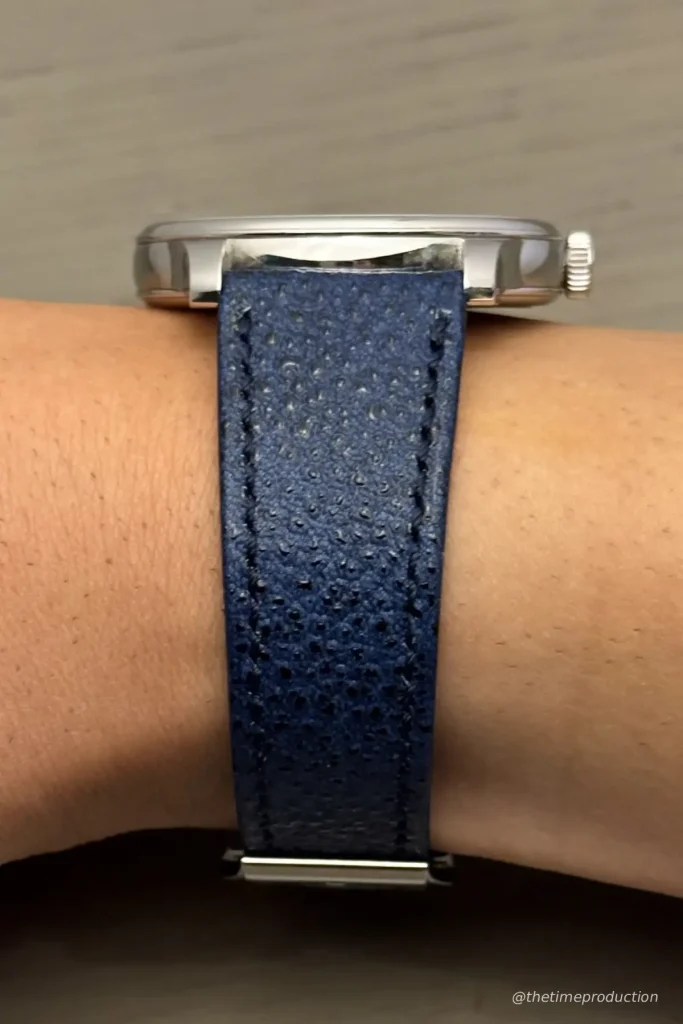
When we met, the prototype was fitted with a strap whose texture intrigued me. Fabian later told me it was Himeji Kurosan leather, finished using a traditional technique involving Japanese urushi lacquer. The standard strap is alligator leather stitched by hand. The Titanium Edition appears on white alligator in the photographs supplied by Fabian. Bespoke straps also allow owners to choose their preferred materials and colours. A grade 5 titanium pin buckle, designed by Fabian and left unsigned, secures the strap. I particularly appreciated that restraint, which to my eye extends the vintage, timeless character of L’Essentiel.
How much does Fabian Pellet’s L’Essentiel Titanium Edition cost?
L’Essentiel Titanium Edition starts at CHF 62,000 excluding VAT. For a watch displaying hours, minutes and seconds, I find the price well justified, even relatively modest, given the work involved in developing the calibre, its hand assembly and finishing, and the Grand Feu enamel dial. All three platinum watches from the first series, launched in 2024, have been sold and delivered. Fabian explains that those initial sales allowed him to launch his independent venture and continue creating his own watches.
The Titanium Edition has no announced limit on the total number of watches, but production slots remain scarce. Fabian describes a current output of around three watches a year, with the aim of reaching five over the coming year while keeping the number of variations in check. A non-refundable deposit of 50%, or CHF 31,000 at the base price, confirms the order and secures a place in the production schedule. Delivery is currently estimated at 12 to 18 months after confirmation of the deposit. The balance is due on completion of the watch, before shipping. Upcoming availability should be checked directly with Fabian.
Fabian Pellet L’Essentiel Titanium Edition: An Accomplished First Watch
Discovering the L’Essentiel prototype left me with the impression of a project that was already fully realised. I enjoyed its balance on the wrist, the character of its enamel dial and the refinement of the movement. Above all, its classical face, the way it wears and what it reveals when turned over all work together. Fabian’s experience in restoration, grand complications and teaching finds expression in practical choices, down to the way the mechanism becomes understandable to the person looking at it.
This is particularly apparent in the relationship between architecture and finishing. The shapes of the bridges expose the movement’s components, while the treatment of surfaces and edges emphasises their volume. Decoration therefore helps the eye read the construction. Fabian himself distinguishes assembling complications from designing a movement using his own calculations and drawings. Starting with a watch displaying hours, minutes and seconds was a challenge in its own right. It tested his abilities as a designer as he worked towards the simple, reliable mechanism he wanted. He acknowledges a nostalgia for older practices and the pleasure of continuing to practise the techniques he has learned, while also using modern tools and techniques for the precision they bring. Manual work, rigour and thoroughly considered technical and aesthetic choices define the watchmaking he wants to share with his collectors.
Fabian is now preparing a second evolution of the current movement, exploring both aesthetic and mechanical developments. He makes clear, however, that manufacturing the components has not yet begun. The case that will house it also remains undecided. He wants to preserve the surprise and continue moving closer to his own standards of haute horlogerie, hoping this next step will open up further possibilities.
The question of a smaller format remains a separate, open consideration. It is not an announced feature of the second evolution. With the current construction, reducing the diameter could make the fixings visible on the mainplate and require the case to be redesigned. I would be curious to see how Fabian might approach this, and how his watches would look in different proportions, perhaps in gold or another material. He also hopes that watches bearing his name will continue ticking on the wrists of his family or clients long after he is gone.
I would like to thank Fabian warmly for his time, his willingness to answer my questions and the precision of his explanations. I was delighted to meet him in person in Japan after our conversations online. Those exchanges helped me discover his watch and better understand the thinking and constraints behind its design. I came away with new knowledge and a more attentive eye for the watchmaker’s craft. That is also what I seek in these encounters, and what I hope to share with you through my articles. This first creation has made me want to follow the next stages of his journey closely.
Fabian Pellet L’Essentiel Titanium Edition – Watch Specifications
- Brand: Fabian Pellet
- Model: L’Essentiel Titanium Edition
- Case Material: Grade 5 Titanium, Available with a Polished or Brushed Finish
- Dial: Two-Piece White Grand Feu Enamel Dial Featuring Black Roman Numerals, a Railroad Minute Track, a Small Seconds Subdial at 6 O’Clock and Hardened, Polished and Flame-Blued Steel Hands
- Functions: Hours, Minutes and Small Seconds
- Movement: Proprietary Hand-Wound Calibre FAP 24 evo1, Independently Developed by Fabian Pellet, Featuring an Openworked Architecture with German Silver Mainplate and Bridges, a Dial-Side Winding Mechanism, Gold Escapement Cap-Jewel Settings, a 14.30mm In-House Free-Sprung Balance Wheel with Breguet Overcoil Hairspring, Swiss Lever Escapement and a Frequency of 18,000vph (2.5Hz). Comprising 102 Components and 25 Jewels, with a Diameter of 32mm and a Thickness of 4.25mm
- Power Reserve: 70 Hours
- Case Dimensions: 39mm (Diameter) x 9.20mm (Thickness Including Crystals)
- Water Resistance: 30m (3 ATM)
- Crystal: Sapphire Crystal on Both Sides, with an Exhibition Caseback Revealing the Movement Architecture and Hand Finishing
- Strap: Hand-Stitched Alligator Leather Strap with a Grade 5 Titanium Pin Buckle, with Bespoke Strap Options Available
- Production: Limited-Production Series
- Availability: Made to Order with a 50% Non-Refundable Deposit and an Estimated Delivery Time of 12–18 Months Following Deposit Confirmation
- Retail Price: CHF 62,000 (Excluding VAT)
What do you think of L’Essentiel Titanium Edition and this approach to classical watchmaking? I would be delighted to read your impressions and discuss them in the comments.
If this article added value or sparked a discovery, you can support the project HERE. Your contribution helps me keep weekly articles and a biweekly newsletter free, accessible, and independent for everyone.
For more information about Fabian Pellet, click here.